Forgiveness: Letting Go, Receiving Grace, and Moving Forward

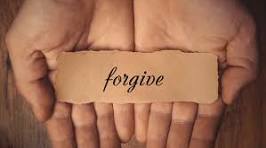
There are few things in life more difficult, and at the same time, more necessary, than forgiveness.
Not just forgiving others. But asking for forgiveness. And sometimes… even forgiving yourself.
Because life has a way of leaving marks. Words spoken that we wish we could take back. Choices made that ripple farther than we expected. Moments that, if we could, we would go back and rewrite.
And sooner or later, we all come face to face with the same question: What do I do with what has happened?
Scripture doesn’t leave forgiveness as something optional—something we take or leave depending on how we feel. It speaks to it clearly: “…forgiving one another… even as Christ forgave you, so you also must do” (Colossians 3:13, NKJV).
That word—must—has a way of settling things. Because forgiveness is not rooted in what others have done to us. It’s rooted in what Christ has done for us. And that changes everything.
Most of us begin here, learning to forgive others. And that’s not easy. Because the hurt is real.
And sometimes, it runs deep. Forgiveness doesn’t mean pretending it didn’t matter. It doesn’t mean the situation was acceptable, or that trust is instantly restored.
What it means is this: you release the debt. You choose not to hold it over them. You choose not to carry it anymore. And that kind of forgiveness… doesn’t come naturally.
It comes from God working in us. Paul writes, “…forgiving one another, even as God in Christ forgave you” (Ephesians 4:32, NKJV).
That’s the standard. And it’s a high one. But if I’m honest, sometimes forgiving others isn’t the hardest part. Sometimes the harder step is asking for forgiveness. Because that requires humility. It requires looking back and saying, “I was wrong.”
And this is where it becomes very personal for me. There have been seasons in my life where I had to go back and ask my family for forgiveness. For the hurt my choices caused. For the strain it put on relationships. For the impact it had on people I love. There’s nothing easy about that. You can’t soften it. You can’t explain it away. You just have to own it.
Scripture says, “Confess your trespasses to one another…” (James 5:16, NKJV).
And I’ve learned that confession isn’t about shame—it’s about restoration. It opens the door for healing in ways nothing else can. But at the center of all of this… is something even deeper.
We all need forgiveness from God. “For all have sinned and fall short of the glory of God” (Romans 3:23, NKJV).
And there comes a moment when you have to stop just dealing with consequences…and deal with your sin. To come before Christ. To confess. To ask for forgiveness.
And then—to receive His grace. That part matters more than we realize.
Because Scripture gives us this promise: “If we confess our sins, He is faithful and just to forgive us…” (1 John 1:9, NKJV).
Not maybe. Not sometimes. Faithful.
Which means when God forgives… He truly forgives. And yet, even knowing that, there’s a place many people still struggle. Forgiving themselves. You know God has forgiven you. But you still carry it. You replay it. You relive it. You hold it against yourself.
But here’s a truth I’ve had to learn—and keep learning: If God has forgiven you… you don’t have the authority to hold onto it.
Psalm 103:12 says, “As far as the east is from the west, so far has He removed our transgressions from us.”
That’s complete. That’s final. Learning to forgive yourself isn’t about ignoring the past. It’s about agreeing with God about what He has already done with it. And there is freedom in that.
Because one of the greatest misconceptions about forgiveness is that it’s mainly for the other person. But in many ways… it’s for you.
Unforgiveness keeps you stuck. It keeps you bitter. It keeps the wound open.
But forgiveness…releases you.
Even practical counseling insights often echo this truth—that choosing forgiveness is a key step toward emotional and relational healing. And that lines up with what Scripture has been saying all along.
Now, forgiveness doesn’t always happen all at once. Sometimes it’s a process. Sometimes it’s something you choose today… and then choose again tomorrow. And maybe again the next day. But every time you do…you move forward. And that’s really what this is about. Because you cannot move forward while holding onto what’s behind you.
I haven’t just read that in Scripture—I’ve had to live it. And what I’ve found is this: forgiveness is where healing begins.
Not because everything changes instantly…but because you’ve placed it in God’s hands. And that’s where real freedom starts.
Stay rooted,
Pastor David
gracepastordavid@gmail.com